
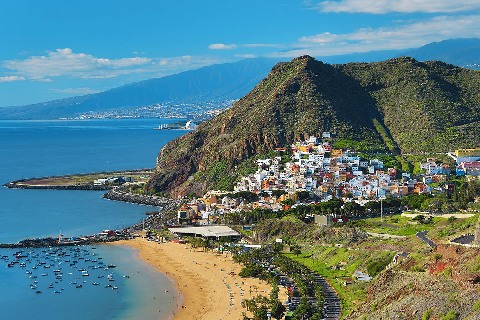
The Canary Islands are an archipelago in the Atlantic Ocean and one of the autonomous regions of Spain. They are located 100-120 km from the coast of Africa and have been a Spanish possession since 1405. Their name comes from a breed of dog selected to guard convicts. According to indigenous legend, Mount Teide is home to the god, parent of the seven islands. The shadow that Teide casts is 200 kilometers into the ocean. Their area is 7447 km². The largest island is also the most populated (Tenerife). The largest city is Las Palmas de Gran Canaria. Important transit base (Port of Santa Cruz de Tenerife and Puerto de Las Palmas).
Before the conquest of Cana by the Spanish, the islands were inhabited by Berber tribes (Stanzas) who came from North Africa. The main livelihood was cattle breeding, fishing and growing cereals.
On September 29, 1496, a peace treaty was signed in Los Realejos. The local chiefs formally surrendered and converted to the Catholic religion.
The Canary Islands are located 100-120 km from the coast of Africa. They consist of 7 large and numerous small islands with a total area of 7447 km². They are built mostly of basalts and there are many extinct and active volcanoes on the islands of Tenerife, La Palma, Lanzarote. The highest point is the active volcano Teide (3718 m), rising on the island of Tenerife and being the highest point in Spain. The climate is tropical, trade wind moderately warm and dry. The annual amount of precipitation is 300 – 500 mm. Evergreen bushes and forests are spread along the slopes of the volcanoes. The flora of the islands includes many endemic species (dragon tree, Canary date palm, Canary pine). Bananas, cereals, potatoes, citrus crops, tobacco, vines, legumes are grown in large plantations. Goats, sheep and cattle are raised. Fishing is an ancient way of life. In recent years it has been a major tourist destination in Spain. An important transit naval base in the Atlantic Ocean.
from Wikipedia


